Prime Minister Supports Free Speech Amid Protest at National Press Club
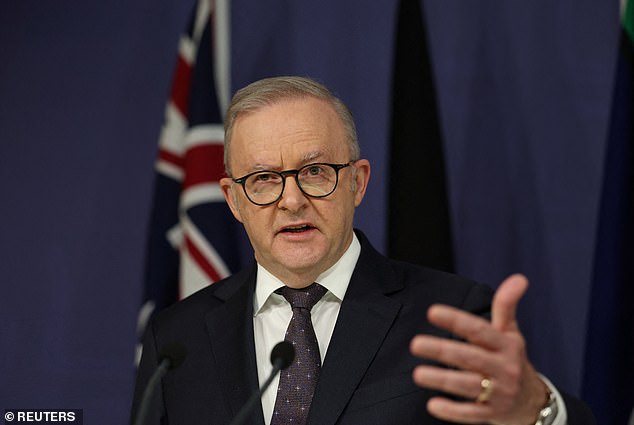
Prime Minister Anthony Albanese has publicly defended the right of Pauline Hanson, the leader of One Nation, to speak at the National Press Club in Canberra, despite a protest that disrupted her address. The incident has sparked a broader discussion about free speech, political tensions, and the role of media in Australian democracy.
During her speech on Wednesday, a banner was unfurled behind Hanson, interrupting her talk. The banner read: "I opposed a pay rise for workers while I took a $100,000 pay rise." This provocative message drew immediate attention and raised questions about the intent behind the disruption.
The Australian Federal Police (AFP) are currently investigating the incident, including allegations that two individuals entered the venue the day before to set up the poster. While the details remain under scrutiny, Albanese expressed concern over the nature of the protest.
"I'm not aware of all the details – that's a matter for the AFP – but I think quite clearly these actions can be counterproductive," he said during a press conference in Sydney. "One of the things that I've said consistently is that we need to turn the temperature down."
Albanese emphasized the importance of respectful dialogue, even when addressing controversial viewpoints. He argued that people should be allowed to express their views at the National Press Club as long as it is done in a manner that respects others.
"Whatever views people have, they should be allowed to address the Press Club with respect," he said. "That should be treated respectfully."
However, the prime minister also criticized One Nation’s policies, arguing that they lack concrete solutions to Australia’s economic challenges. He pointed out that during her speech, Hanson did not address key issues such as the cost of living.
"I haven't seen any policy announcements for cost-of-living measures," Albanese said. "One Nation does not present alternatives."
He highlighted that One Nation has consistently opposed government initiatives aimed at improving Australians' lives. For instance, the party has voted against increases in the minimum wage and has supported measures that make it easier to sack employees. Additionally, they have opposed investments in public housing and other programs designed to improve living standards
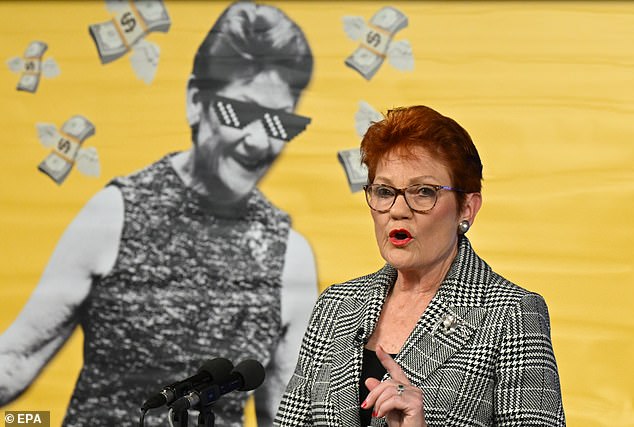
During her address, Hanson criticized public broadcasters and suggested that she would eliminate SBS entirely if her party came to power. She even told a journalist that she wouldn’t have a job if One Nation was in control. This statement further intensified the debate over the role of media in Australian society.
Albanese strongly disagreed with the idea of sidelining public broadcasters like the ABC and SBS. He argued that these outlets play a crucial role in maintaining a healthy democracy.
"I'll tell you what, the World Cup's on at the moment, and it has many millions of Australians watching it," he said. "I think the idea that you just exclude media and abolish SBS… I think I would hope that all media organizations come out and oppose that."
The incident at the National Press Club underscores the growing polarization in Australian politics. While free speech remains a cornerstone of democratic values, the methods used to express dissent continue to raise concerns about the tone and impact of political discourse.
As the investigation into the protest continues, the conversation around how to balance free expression with respect for opposing viewpoints will likely persist. For now, Albanese’s comments reflect a broader call for restraint and constructive dialogue in an increasingly divided political landscape.