Macau and Hong Kong: A Collaborative Approach to Tourism and Economic Diversification
Macau and Hong Kong, two distinct yet closely connected cities, are exploring ways to enhance their tourism sectors by working together rather than competing. This collaborative approach is seen as a key strategy in the ongoing efforts to diversify Macau's economy, which has long been heavily reliant on its gaming industry.
Maria Helena de Senna Fernandes, director of the Macau Government Tourism Office, emphasized that the two cities have a long history of cooperation in attracting international visitors. She highlighted the importance of leveraging their respective strengths to create a more integrated tourism experience for travelers. According to Fernandes, the collaboration should focus on making better use of shared resources and promoting the unique stories of each city within the Greater Bay Area.
The recent opening of the Hong Kong-Zhuhai-Macau Bridge in 2018 has significantly improved regional connectivity, making multi-destination travel more convenient for tourists. This infrastructure development has allowed visitors to explore multiple cities within the region with greater ease. Fernandes also pointed out the critical role of Hong Kong International Airport as a transport hub for the Greater Bay Area, further reinforcing the potential for shared visitor flows between the two cities.
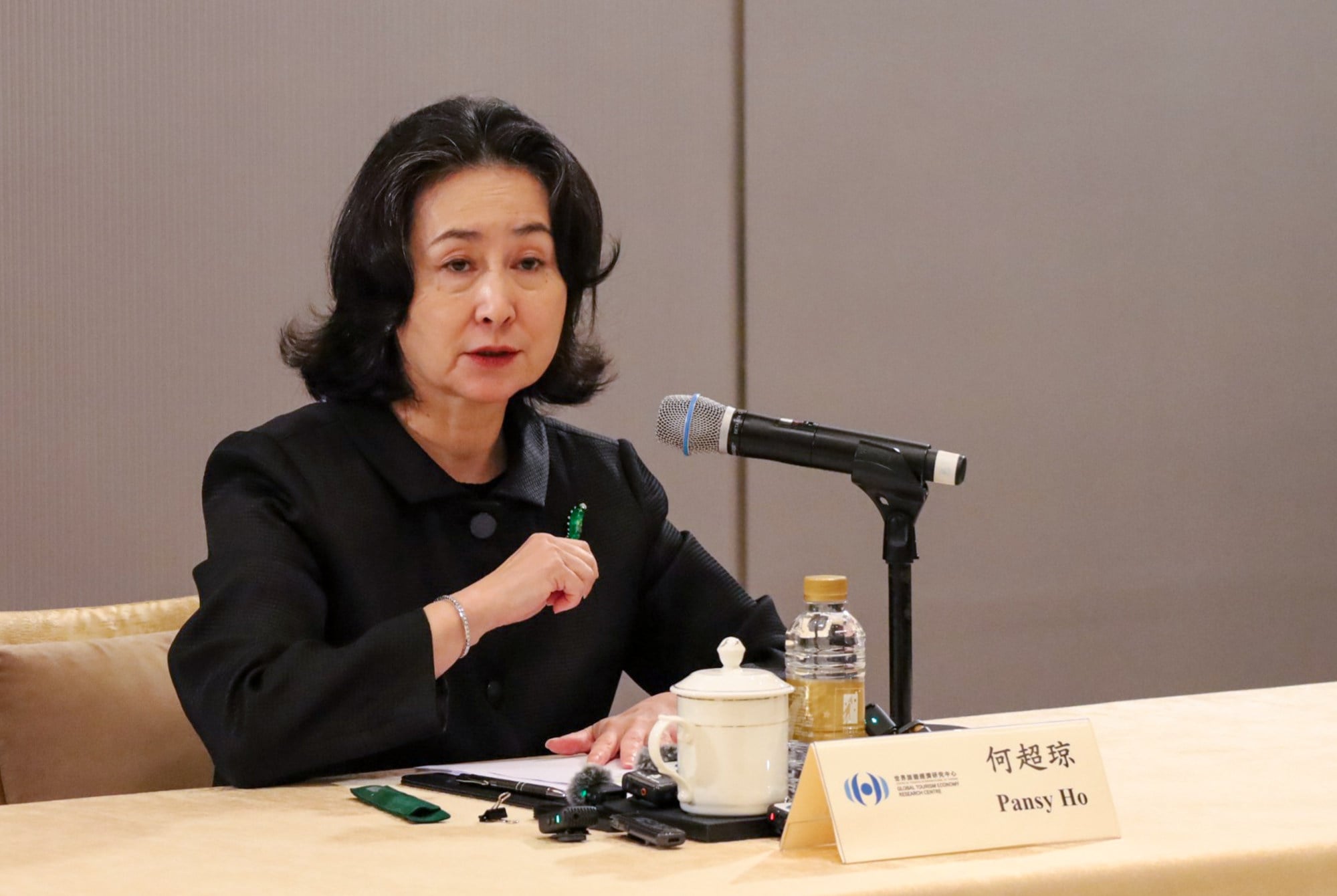
Pansy Ho Chiu-king, president of Macau's non-profit Global Tourism Economy Research Centre, echoed these sentiments, advocating for a collective marketing approach for the Greater Bay Area cities. She stressed that the concept of "multi-destination travel" should not be limited to transportation but should instead offer visitors the opportunity to experience the distinct characteristics of all 11 cities in the region.
Ho, whose family is deeply involved in Macau's casino industry, noted that the city's strategic position at the center of the region's transport network makes it an essential link between east and west. She emphasized the importance of developing a comprehensive narrative that showcases the diversity of the Greater Bay Area.
In 2025, Macau welcomed over 40 million visitors, surpassing a significant milestone. Meanwhile, Hong Kong recorded 49.9 million arrivals, reaching about 76% of its 2018 peak. These figures highlight the continued appeal of both cities as tourist destinations
As Beijing continues to promote its initiative to help Macau diversify its economy, the Guangdong-Macau In-Depth Cooperation Zone in Hengqin plays a crucial role. This zone aims to address Macau's limitations in land and resources by providing space for industries that cannot easily develop within the city's small area.
Cheong Chok-man, director of Macau's Policy Research and Regional Development Bureau, acknowledged that economic diversification remains a major challenge for the city. While progress has been made through initiatives such as the "1+4" development framework, which aims to reduce reliance on gaming by strengthening Macau's position as a global tourism and leisure center, the city's economic structure remains heavily concentrated in the gaming sector.
The "1+4" strategy focuses on four emerging industries: traditional Chinese medicine and healthcare, modern finance, high technology, and convention, exhibition, culture, and sports-related businesses. Cheong described diversification as both an "old problem" and a "new challenge," emphasizing that it is a long-term priority for Macau.
Efforts to diversify have been constrained by Macau's small size, limited domestic market, and labor shortages. To address these challenges, the Hengqin cooperation zone has become a critical part of Macau's development plans. The goal is to create economic linkages that support Macau's diversification ambitions, under the model of "research in Macau, commercialisation in Hengqin; registration in Macau, production in Hengqin."
Established in 2021, the cooperation zone has already attracted over 8,000 Macau-invested enterprises as of June this year. This development underscores the potential for economic growth and innovation beyond the traditional gaming sector.
The Greater Bay Area initiative, led by Beijing, seeks to transform Hong Kong, Macau, and nine cities in Guangdong province into an economic powerhouse. By fostering collaboration and integration, the region aims to create a more dynamic and sustainable economic landscape.