El Niño has officially formed in the Pacific, and forecasters give it a 60-65% chance of turning very strong, putting Vietnam's Central Highlands coffee belt at risk of severe drought into 2027.
The phenomenon has been confirmed to have developed over the central equatorial Pacific. According to the National Center for Hydro-Meteorological Forecasting, it is expected to continue strengthening through the second half of 2026 and may persist into early 2027. This information was shared during a press conference held by the Ministry of Agriculture and Environment on June 17.
Sea surface temperatures in the Niño 3.4 region have risen significantly. In May, they were 0.5°C above average, and by early June, they reached approximately 0.7°C above normal. These temperature anomalies confirm that El Niño has taken hold. The agency has increased its probability of a very strong El Niño from 20% in April to 37% in May, now estimating it at 60-65%.
A very strong El Niño event would be comparable to the 2015-2016 episode, which is considered one of the strongest since 1950. It is also similar in intensity to the major El Niños of 1982-1983 and 1997-1998.
The economic implications are significant, particularly for the Central Highlands, where the coffee belt is located. The National Center for Hydro-Meteorological Forecasting warned that the region could face a shortage of irrigation water for industrial crops, with coffee being the most affected, during the 2026-2027 dry season.
Vietnam is the world’s largest supplier of robusta coffee, a type of bean that forms the base of most instant coffee and espresso blends. Robusta accounts for about 95% of the country’s coffee output, according to the U.S. Department of Agriculture.
The timing of this El Niño makes it a global market concern. Robusta prices hit multi-decade highs in 2024 and early 2025 due to droughts affecting rival producers. London futures for robusta coffee surpassed $5,800 per tonne. However, prices dropped to around $3,470 by April 2026 as traders anticipated a record Brazilian harvest and the first global surplus in four years. A severe drought in Vietnam’s coffee belt could disrupt these expectations.
Germany, the largest buyer of Vietnamese coffee within the EU, and roasters worldwide would feel any potential supply squeeze
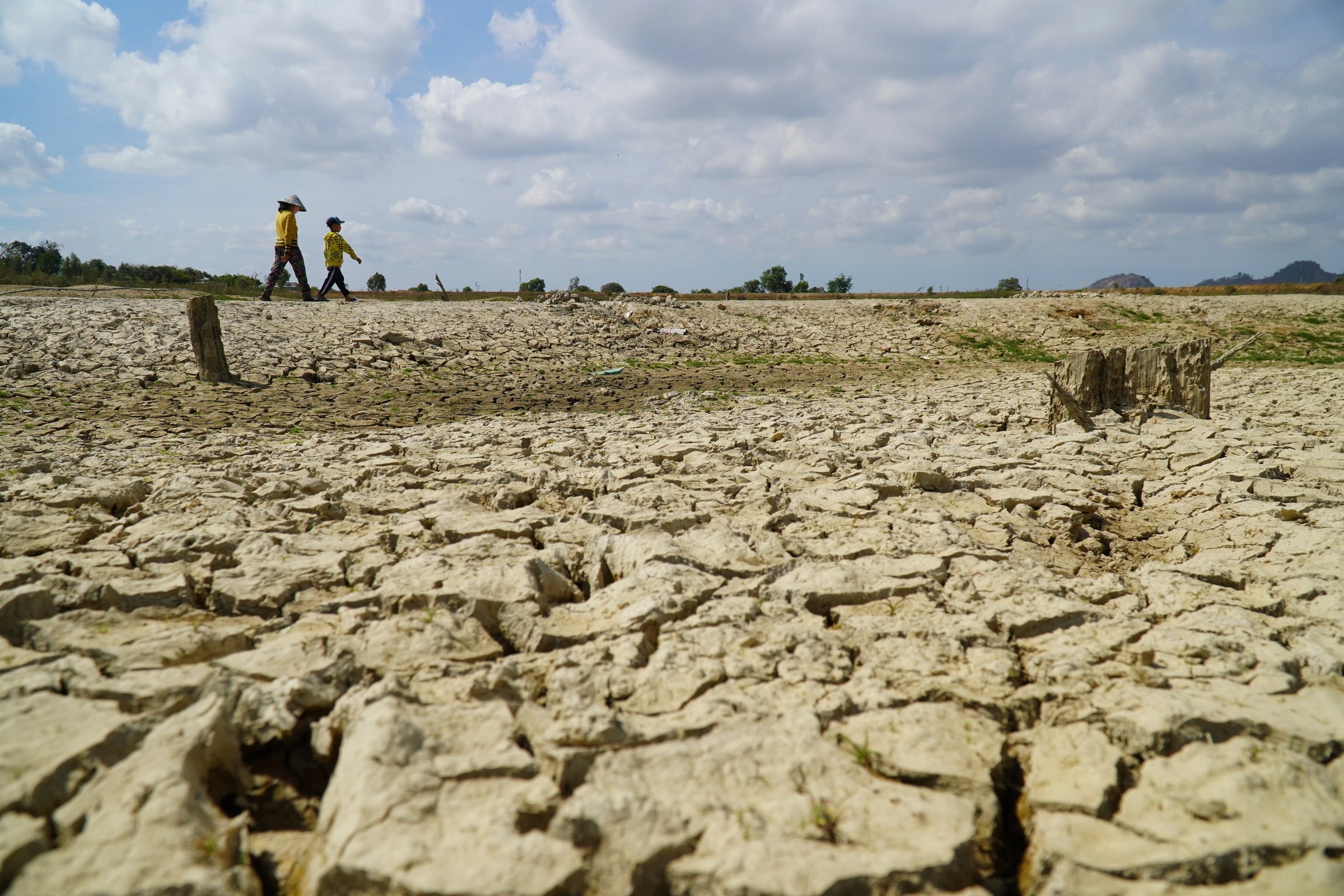
Drought in Lam Dong Province in Vietnam's Central Highlands in 2020. Photo by VnExpress/Viet Quoc
Beyond coffee, a very strong El Niño would lead to above-average temperatures, fewer cold spells, and widespread rainfall deficits, especially in the central region, the Central Highlands, and the south. Average temperatures in the final months of 2026 could be 0.5 to 1.5°C above the long-term norm, with some areas experiencing increases of 1 to 2°C between October and December.
Rainfall could fall between 25-50% short of normal levels, with the sharpest declines along the south-central coast. This could increase the risk of drought, water shortages, and saltwater intrusion in the Mekong Delta into early 2027.
The last major El Niño event provides a preview of what could happen. In 2015, heat waves lasted up to 32 days in the south-central region, 36 days in the central region, and 39 days in the north-central region. The highest temperature recorded that year was 42.7°C (108.9°F) in Con Cuong, Nghe An Province, on May 30.
El Niño years typically bring fewer storms, but the agency has warned that extreme weather events can still occur. For example, historic rainfall in Quang Ninh in the north and floods in Quang Nam and Quang Ngai in the central region, which followed Typhoon Ketsana, both occurred under active El Niño conditions.
"El Niño doesn't only raise the risk of heat, drought, water shortages, and saltwater intrusion; heavy rain, flash floods, landslides, and powerful storms can still occur," said Dang Thanh Mai of the National Hydro-Meteorological Administration.
The Vietnamese forecast aligns with the U.S. National Oceanic and Atmospheric Administration, which issued an El Niño Advisory in early June. It estimates the chance of a very strong event—defined as Pacific sea temperatures more than 2.0°C above average—at 63%. Some dynamic models suggest that 2026 could rival the 1997-1998 El Niño, which is the most intense on record by ocean heat.